
Corporate Catering Services Washington DC: 2026 Guide
Last Updated: Sep 21, 2026
What Corporate Catering Services in Washington DC Actually Include
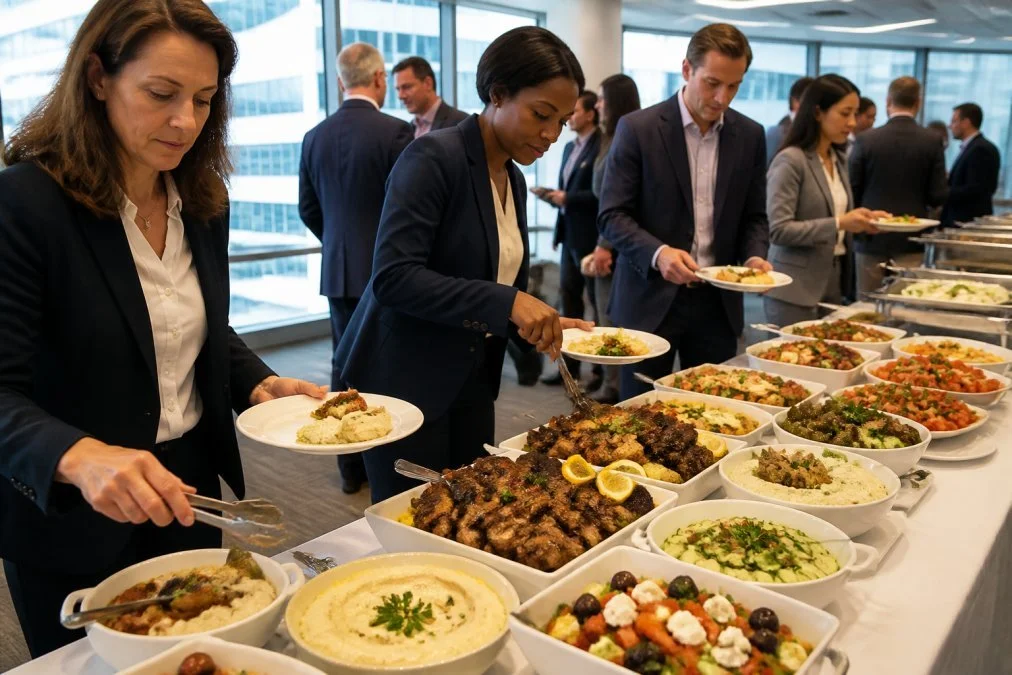
Corporate catering services in Washington DC cover everything from a plated dinner for 200 at a gala to a breakfast spread for eight in a conference room. At Parthenon Greek Restaurant & Chevy Chase Lounge, we've been dedicated to serving high-quality Greek cuisine since 1989, and the difference between a smooth event and a stressful one comes down to planning.
Infographic visualizing the diverse food options included in corporate catering services in Washington DC
Full-Service Catering Options
Full-service catering is the right call when the event matters and you don't want to handle logistics. It typically includes professional staffing, on-site execution, buffet or plated service, beverage service, and cleanup.
Drop-Off Catering for Offices
Drop-off catering works best for office breakfast, business lunch, and smaller team gatherings. The food arrives hot and ready, and your team handles setup.
Pro TipAsk your caterer how they package hot and cold items separately. A common mistake is ordering a single drop-off package for a mixed menu, then watching the hot dishes cool while the salads sit in the same delivery.
Full-Service vs Drop-Off Catering: Which Fits Your Event
The choice between full-service and drop-off catering depends on guest count, event formality, and how much time you can spare.
Corporate Catering Budget Planning by Headcount
Corporate catering budget planning starts with headcount, not menu. Build your estimate around guest count first, then layer in service style, dietary needs, and add-ons like beverage service or rentals. Getting that order wrong is the most common reason a corporate catering quote comes back higher than expected.
What Actually Drives the Per-Person Number
Four cost drivers explain almost every quote variance:
Service style. Drop-off is the lowest tier because you buy food and packaging only. Full-service adds servers, captains, setup, breakdown, and cleanup, usually the largest line item.
Menu complexity. A buffet of salads, grilled proteins, and starches is cheaper per person than a plated multi-course dinner, which requires more kitchen labor, service staff, and china.
Time of day. Breakfast and lunch drop-off orders are the most efficient per person. Evening receptions with passed hors d'oeuvres and a bar carry the highest load, because you pay staff hours during a premium window.
Add-ons. Beverage service, bar packages, rentals (linens, china, glassware, chafing dishes), and floral or table decor each add to the per-person figure. Rentals surprise planners most, because delivery, setup, and pickup are often billed separately.
Budget-to-Headcount Calculator Basics
A budget-to-headcount calculator divides your total event budget by guest count to find your per-person target. Here is how to use it:
Set your total budget for food, service, and rentals
Subtract estimated beverage and staffing costs
Divide the remainder by your confirmed guest count
Compare that per-person figure against menu tiers
Add a buffer for last-minute guest additions
The Trade-Offs That Move the Number
When the per-person figure lands below the tier you want, you have four levers, and they are not equal:
Cut the guest list. The cleanest lever. Fewer guests means lower food, labor, and rental cost at once.
Simplify the service style. Moving from plated to buffet, or full-service to drop-off, removes labor and rental cost without touching food quality.
Trim the menu. Fewer passed hors d'oeuvres or dropping a second protein lowers food cost without changing the service model.
Drop add-ons. Beverage packages, floral, and premium rentals are easiest to remove, but guests notice them most.
Watch OutThe most common budgeting mistake is locking in a menu before confirming headcount. Guest counts shift, and a menu priced for 30 that ends up serving 45 will either run short or blow the budget. Confirm headcount, then confirm menu, then confirm service style, in that order.
Getting a Quote You Can Actually Compare
Pricing depends on quantity, dates, and delivery, so request a written quote rather than guessing from a menu. When comparing caterers, make sure each quote covers the same scope: food, labor, rentals, delivery, setup, breakdown, and gratuity. A lower quote that excludes staffing or rentals isn't lower, it's a different scope.
Dietary Restriction Catering Tips for Mixed Office Groups
Dietary restriction catering tips start with one rule: ask early and ask specifically. A generic "any dietary needs?" email gets vague answers. A checklist gets real ones.
Event Logistics for High-Security Office Buildings
Event logistics get complicated fast in high-security office buildings, and this is the single biggest gap between a caterer who has worked the federal corridor and one who has not. Loading dock access, badge requirements, and elevator reservations can turn a simple delivery into a two-hour ordeal, and in a building with federal tenants, a missed delivery window can mean the food never gets upstairs at all.
Why Secure Buildings Are Different
A standard office building delivery is a curb-to-kitchen run. A secure building delivery is a chain of checkpoints, and every link has to be scheduled in advance:
Perimeter access. The delivery vehicle needs a scheduled arrival window at a specific entrance, often a service entrance rather than the main lobby.
Loading dock reservation. Docks are shared and time-slot controlled. If your caterer misses the slot, the next available window may be hours later.
Vendor screening. Many buildings require the caterer to submit driver names, vehicle information, and company details in advance, sometimes 24 to 72 hours ahead.
Badge and escort. Drivers and service staff may need temporary badges, or may need to be escorted by a building employee at all times.
Freight elevator reservation. Food, chafing dishes, and rental equipment cannot ride passenger elevators in most secure buildings. The freight elevator has to be booked.
Certificate of insurance. Most buildings require the caterer to carry general liability coverage and to name the building or property manager as an additional insured. This is a document request, not a verbal confirmation.
The Pre-Booking Checklist
Confirm these details with your building manager before you book catering, not after:
Delivery window and loading dock reservation
Advance screening requirements and lead time
Vendor badge or escort requirements
Freight elevator availability and reservation process
Certificate of insurance requirements and additional-insured language
Food handling rules for common areas, conference rooms, and lobbies
Whether open flame, chafing fuel, or warming equipment is permitted
What to Tell Your Caterer
When you place the order, hand over a single written brief that includes:
The exact delivery address and the specific entrance the driver should use
The loading dock reservation time and any dock contact name or number
The names of every driver and service staff member who will be on site
The building's screening lead time, so the caterer can submit names in time
The freight elevator reservation window
A copy of the certificate of insurance request, including the additional-insured language
Any restrictions on equipment, open flame, or food handling in common areas
Timing Buffers That Save Events
Build buffer into the schedule, because secure buildings consume time in ways standard buildings do not:
Add 20 to 30 minutes for screening and dock check-in before the caterer's setup window begins.
Add 15 to 20 minutes for the freight elevator ride and floor-to-floor movement.
Add 15 minutes for setup once the food is on the floor, because service staff may need to be escorted between rooms.
Schedule the delivery to arrive at least 60 to 90 minutes before the event start, not 30.
Key Takeaway
For high-security buildings, book your delivery window first and your menu second. The delivery slot is the harder constraint, and a missed window can cost you the entire event.
When the Building Has Federal Tenants
Buildings with federal tenants add a layer that most caterers never encounter. Access rules may be set by the tenant agency rather than the property manager, screening lead times can be longer, and some spaces restrict photography, recording, or outside vendors entirely. If your event is in a building with a federal presence, confirm the access rules with the tenant's facilities contact, not just the building's front desk, and give your caterer the longest lead time the building allows.
Holiday Parties, Office Breakfast, and Last-Minute Catering
Holiday party catering and office breakfast orders follow the same rule: book early. December fills up fast, and caterers in the metro area are often committed weeks in advance.
Sustainability and Zero-Waste Catering in the Metro Area
Zero-waste catering comes down to three choices: how food is served, how it's packaged, and how much is ordered.
Frequently Asked Questions
What is the difference between drop-off catering and full-service catering?
Drop-off catering delivers food in insulated containers for your team to set up and serve themselves. Full-service catering includes professional staffing, on-site execution, buffet or plated dinner service, beverage service, and cleanup. Drop-off suits tight budgets and casual office lunches; full-service fits galas, client hospitality, and events where presentation matters.
How far in advance should I book corporate catering services in Washington DC?
Book two to four weeks ahead for standard business lunches and office breakfast. Holiday party catering and gala season from November through December fills up faster, so reserve six to eight weeks out. For last-minute or emergency requests, call directly: many kitchens can turn around drop-off orders in 24 to 48 hours depending on headcount and menu.
Can corporate caterers accommodate dietary restrictions and allergies?
Yes, with clear communication. Share the full list of dietary restrictions, including gluten-free, vegetarian, vegan, nut allergies, and halal needs, when you request your catering proposal. Mediterranean menus handle this well because dishes like hummus, grilled vegetables, and rice-based sides are naturally plant-forward. Ask for labeled trays and separate serving utensils so guests can identify safe options.
How do I estimate the budget for corporate catering?
Start with headcount, then layer in service style, menu tier, and add-ons like beverage service, rentals, and staff. Drop-off catering costs less per person than full-service because you skip staffing and setup. Build in a buffer for dietary substitutions and last-minute guest additions. Pricing depends on quantity, dates, and delivery, so request a written quote rather than estimating from a generic per-person figure.
What should I look for when hiring corporate catering services?
Check four things: a track record with events your size, clear staffing and event timeline details in the proposal, experience with your building's loading dock and security procedures, and a menu that covers dietary restrictions without extra hassle. Ask how they keep food at safe temperatures during transport and whether cleanup services are included or billed separately.
What are the benefits of choosing Mediterranean cuisine for office meetings?
Mediterranean menus travel well, hold temperature in chafing dishes, and cover most dietary restrictions without special orders. Grilled proteins, mezze spreads, fresh salads, and rice dishes work for buffet style or plated dinner service equally well. The flavors are familiar enough for conservative eaters yet distinct enough to feel like a step up from standard sandwich platters.
Can corporate catering handle a 40-person event without the food arriving cold?
A 40-person event is well within range for most established caterers. The variables that matter are transport distance, insulated holding equipment, and whether service staff are on site to refresh trays. Ask your caterer how they monitor food temperature from kitchen to table, and request a delivery window rather than a single drop time so setup can be coordinated with your event timeline.
Planning corporate catering in Washington DC is really a logistics problem dressed up as a food problem. Get the headcount, delivery window, and dietary needs right, and the menu almost takes care of itself. Parthenon Greek Restaurant & Chevy Chase Lounge has catered private events since 1989, with authentic Greek cuisine, imported ingredients, and a team that handles setup and service so your event runs smoothly. Book a table or request a catering quote to get started.
